
Official Boone County Arrest News
The first tier is the Boone County Sheriff's Office media archive and releases from municipal police. Sheriff posts may describe a significant investigation, ask for help, announce an arrest, or include a suspect image when officials consider it relevant. They are official agency statements, but they are not a full arrest log. An unreported booking may still appear in JailTracker, and an agency account may leave an older allegation online after the court record changes.
Municipal sources serve a different purpose. Zionsville and Whitestown publish monthly activity reports, while Lebanon publishes annual material and operates its own records portal. None of the three largest municipalities had a public named-person daily blotter during the research sweep. Their reports can show agency workload or trends, but they cannot answer who was booked on a given day. Boone County JailTracker is the county identity and booking-photo source for people processed at the jail.
When a release names an alleged offense, preserve its wording. “Arrested on suspicion of” cannot be shortened into a claim that the person committed the act. Charges can be changed, declined, or dismissed.
Boone County Local Crime Reporting
The second tier is professional and community reporting. The Lebanon Reporter covers Lebanon and Boone County courts, police, and crime when editors judge an event newsworthy. It may use an image supplied by an agency, but it promises neither a mugshot gallery nor a complete booking sequence. Boone County Daily News publishes countywide, episodic coverage. Current in Zionsville is the strongest city-specific source for selected Zionsville matters, while Radio Mom republishes some sheriff and police releases, including Lebanon events.
The Lebanon Reporter page captured during research illustrates a local news source rather than an official arrest database.
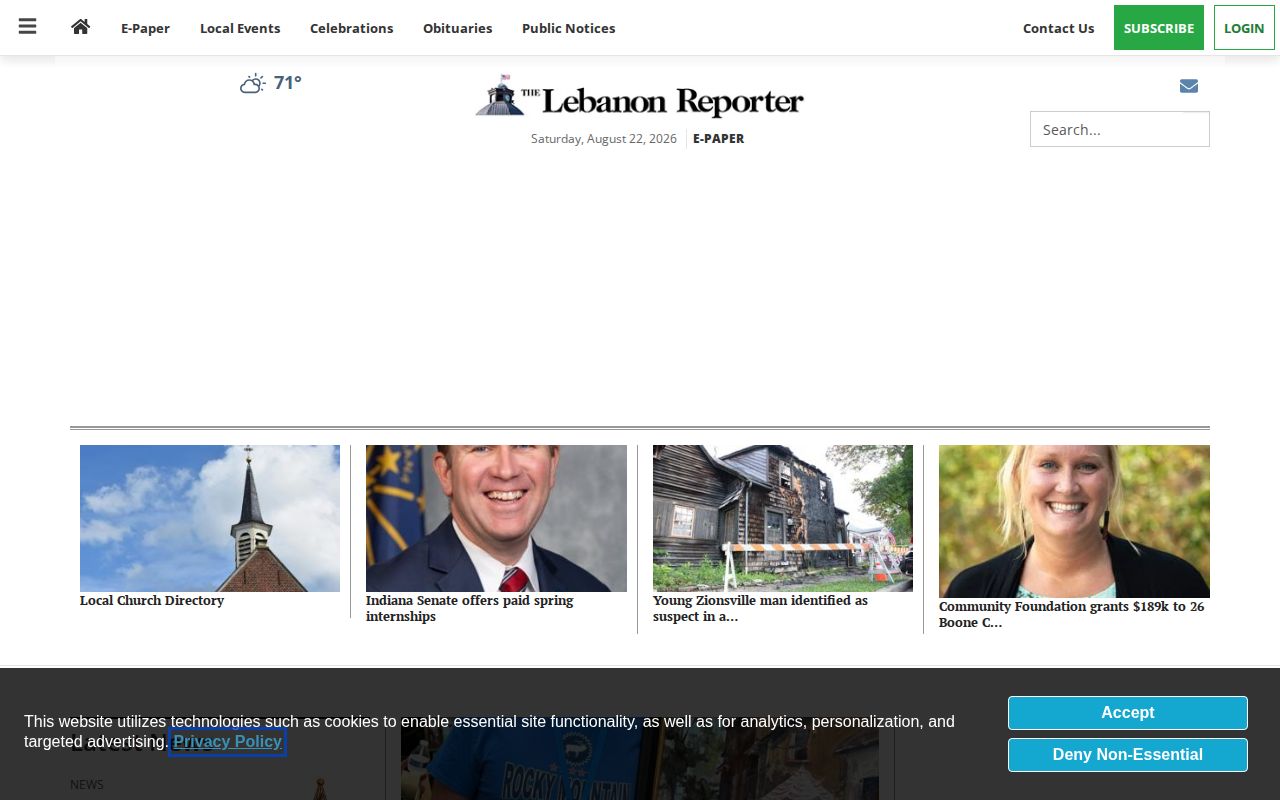
A story found there should be matched to the sheriff's booking system and Indiana court docket, especially when the article remains online long after publication.
| Outlet | Coverage | Photo expectation | Status |
|---|---|---|---|
| Sheriff Media | Selected county investigations and releases | Sometimes, when part of a release | Official, episodic |
| The Lebanon Reporter | Local crime, police, and courts | May use agency-supplied images | Independent local news |
| Boone County Daily News | Countywide community news | Event-dependent | Independent, episodic |
| Current in Zionsville | Zionsville policy and selected cases | Sometimes agency-supplied | Independent city coverage |
| Radio Mom | Selected local releases | Varies by item | Independent local outlet |
Boone County's Historic Boone Beat
Boone County has an unusual local record trail behind older blotter-style reporting. Indiana Public Access Counselor Advisory Opinion 19-FC-40 addressed the county communications center and local agencies. It distinguished centralized CAD calls-for-service data from each law-enforcement agency's duty to create and provide its own statutory daily log. CAD means computer-aided dispatch, the system used to record calls and responses. It is not the same record as a jail intake or court case.
The opinion documents that the Boone County Communications Center had supplied CAD Call for Service Reports to The Lebanon Reporter. That history helps explain older Boone Beat items that mixed jail bookings and dispatch activity from Lebanon, Zionsville, and Whitestown. Preserved examples marked booking charges as preliminary. The relationship does not turn newspaper copy into an official daily log, and current Reporter access could not be audited as a dependable daily feed.
For a specific municipal event, ask the arresting department for “the daily log entry under IC 5-14-3-5(c)” and provide the date, time, and location. Ask the sheriff separately for the county booking record and associated intake photograph. Those records can describe different stages of the same incident.
Unofficial Boone County Mugshot Pages
The third tier consists of commercial aggregators. These sources are not maintained by the Boone County Sheriff's Office, a court, or an Indiana agency. Their pages may duplicate entries, omit later dispositions, preserve old allegations, or attribute records incorrectly. A displayed count is never an official arrest statistic.
- Busted Newspaper appeared active and reverse chronological, but its frequent cadence is a publisher claim rather than a sheriff schedule.
- Recently Booked displayed a rolling 30-day view and claimed several updates per day. It remains unofficial.
- Mugshots.com showed Boone records concentrated in 2013 through 2020 during review, so it is best treated as a historical index.
- Arrests.org returned HTTP 403 to automated inspection. Its cadence and coverage window could not be verified.
- Mugshots.zone appeared frequently refreshed, but its source disclosure was unclear. Treat each entry only as an unverified lead.
The Recently Booked Boone interface captured here is shown to identify the unofficial source, not to endorse its claims.
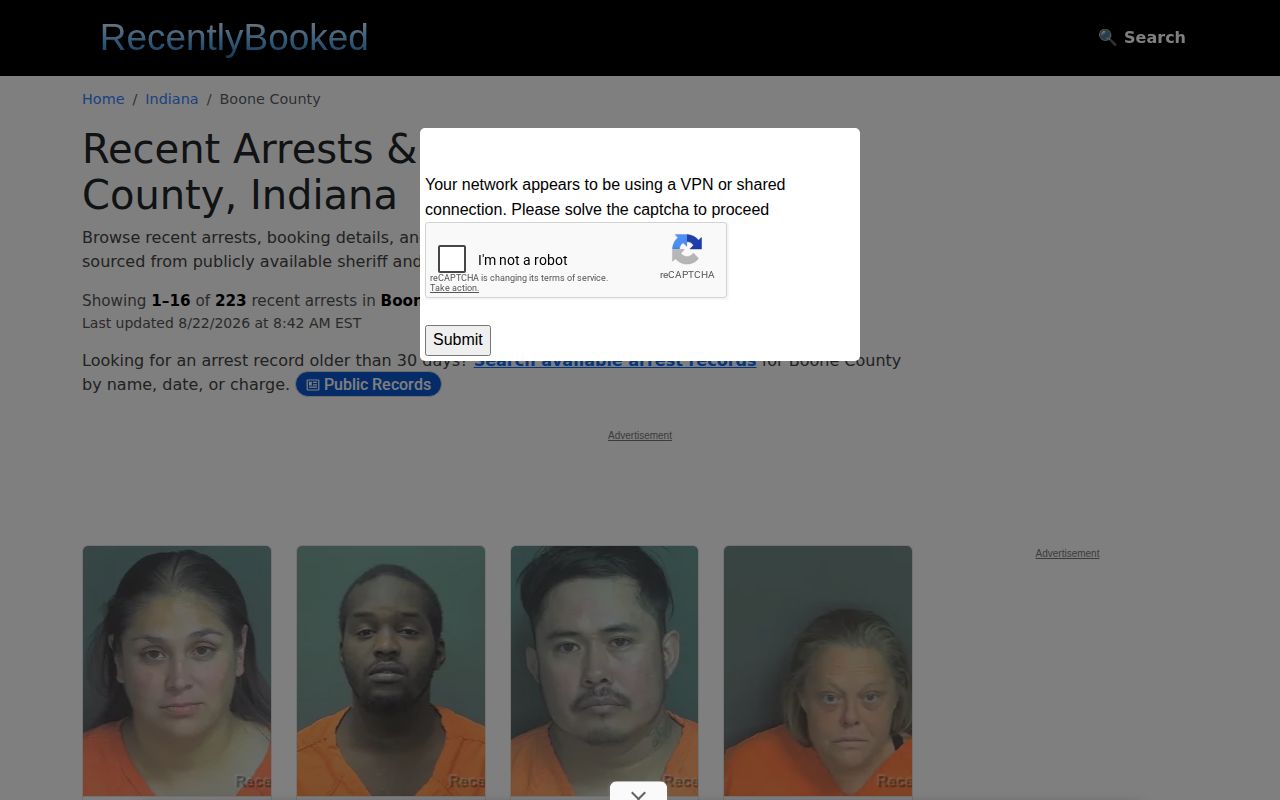
Its rolling window is not Boone County's official booking feed and should be checked against the sheriff's roster.
The Mugshots.com Boone directory captured during review provides a useful example of why source age must be stated.
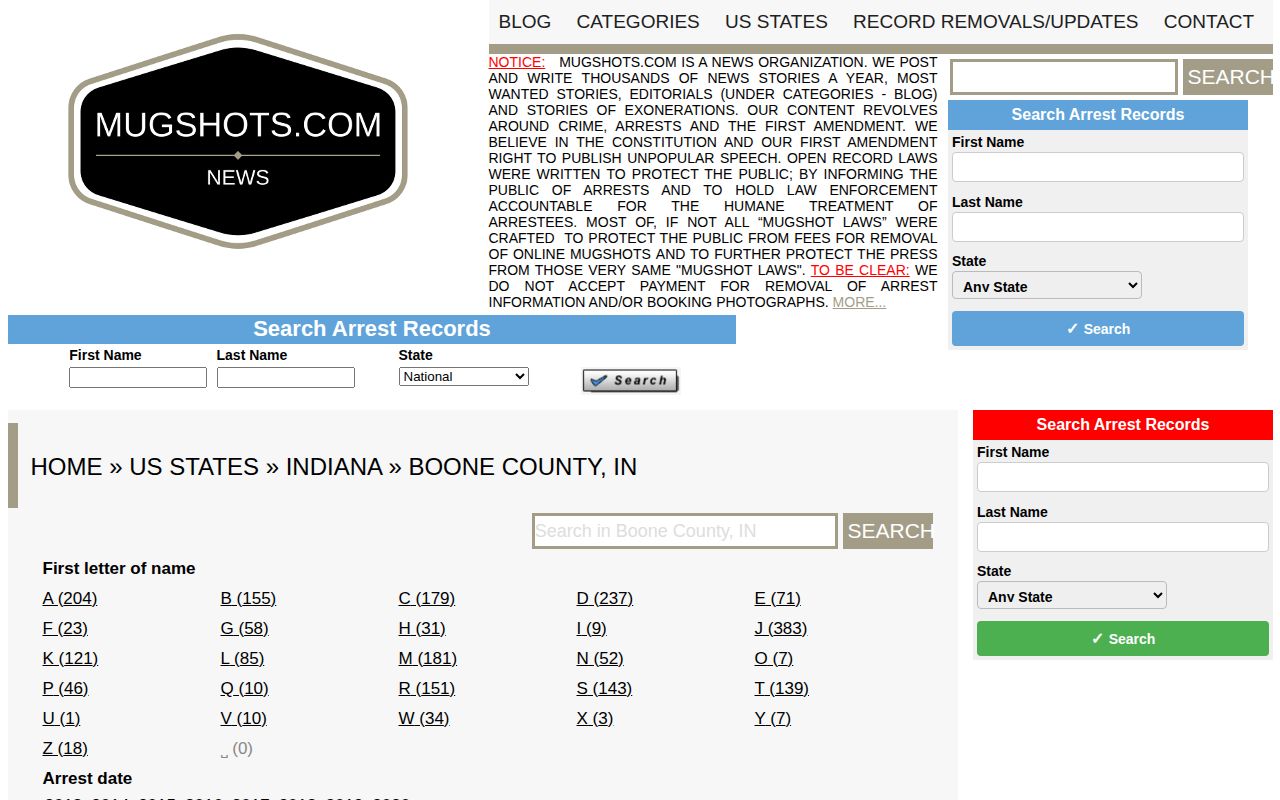
The dated concentration found there makes it unsuitable for determining current Boone County custody.
Verify Boone County Arrest Stories
A story often captures only one moment. Its publication date may differ from the arrest date, and an update can follow days later. Keep both dates. Also note whether the image is identified as a jail intake photo, supplied by police, or merely illustrative. An article that names an arrested person without showing a booking image is not a mugshot page.
- Record the person's name, event date, publication date, named agency, alleged charge, and any case or booking number.
- Use the sheriff's official JailTracker route. Search Active, Released, or All and use an intake-date range. A release can cause an entry to leave Active quickly.
- If the jail entry is missing or an enduring copy matters, submit a focused request through the sheriff's NextRequest portal for the booking record and associated intake photo.
- Search Indiana MyCase, narrow to Boone County, compare identifiers, and read the chronological summary and disposition entries.
- For a city incident report or daily log, contact Zionsville, Lebanon, or Whitestown police separately. The sheriff holds the county intake record.
“Active” on JailTracker describes current local custody reflected by the vendor. “Released” describes a recorded release, not the legal reason for it. A court disposition is the later recorded outcome, which might be dismissal, plea, acquittal, conviction, or another resolution. Do not treat these labels as one interchangeable status.
Boone County Reports Are Aggregate
Think of Boone County's municipal reports as weather maps rather than portraits. Zionsville and Whitestown put out monthly police archives. Lebanon reports annually. The numbers cover calls, cases, arrests, and enforcement work. Each agency defines its own terms. That makes the reports great for spotting trends over time. What they cannot do is name every person booked, so none of them should be passed off as fresh mugshots.
There is no official 24-hour booking page here. No 48-hour release list. No weekly arrest feed. The sheriff runs one dynamic JailTracker portal instead. Visitors can pull a one-day, three-day, or seven-day intake window and filter for Active, Released, or All. A release-date range works well for recent-release questions. It beats borrowing a feed from a different Boone County in Missouri, Arkansas, Kentucky, or Iowa.
City coverage is where the distinction bites. Zionsville busted mugshot records, Lebanon busted mugshot records, and Whitestown busted mugshot records all lead back to the Boone County Jail when someone is processed locally. Municipal reports supply context and trends, not the booking photo itself.
How Boone County Photos Circulate
A Boone County booking photograph is created during jail processing. JailTracker may display it when available, but an individual result can report that no image is available. The sheriff does not publish a fixed intake-to-post promise. Newsrooms may receive an image through a proactive release, the roster, or a public-record request, then decide whether publication serves the story.
Indiana has no verified statute aimed specifically at commercial booking-photo publication or payment for removal. General public-records law, court-access rules, correction procedures, and expungement or sealing under Indiana law still matter. Their effect is source-specific. A later court order does not mean every old news cache changes at once.
Use official correction evidence first if a report is wrong: identify the URL, the exact error, and the originating record. For an allegation that changed, obtain the dismissal, correction, sealing, expungement, or other court record before contacting a publisher. No paid-removal service is linked or recommended. The reliable editorial rule is simpler: official record first, local reporting second, unofficial publisher last, and MyCase at the end of every allegation.